
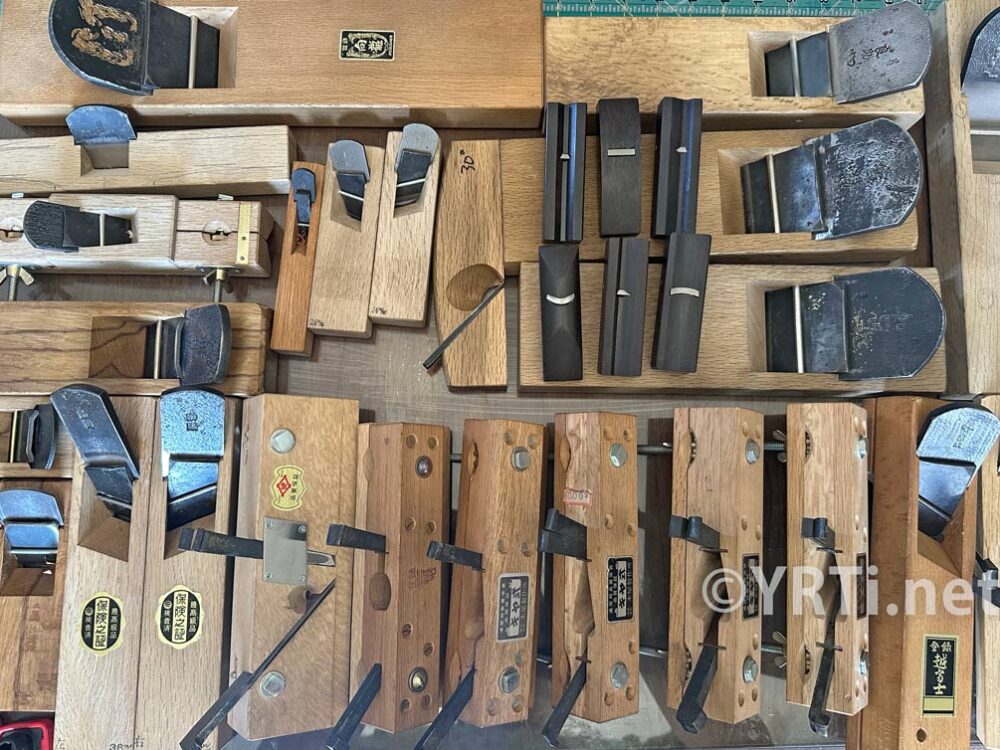
Over the past few years, I went pretty far down the rabbit hole with this hobby and ended up acquiring a wide variety of hand planes. Nowadays, I often get questions on my YouTube videos about the names of my hand planes, what they are used for, and where to buy them, so I would like to share a little about the ones I own.
Types of Japanese Planes
I have listed the different types of planes along with their Japanese names to make them easier to search for online.
Hand Plane
Japanese Name: 鉋 Kanna or 平鉋 Hira kanna
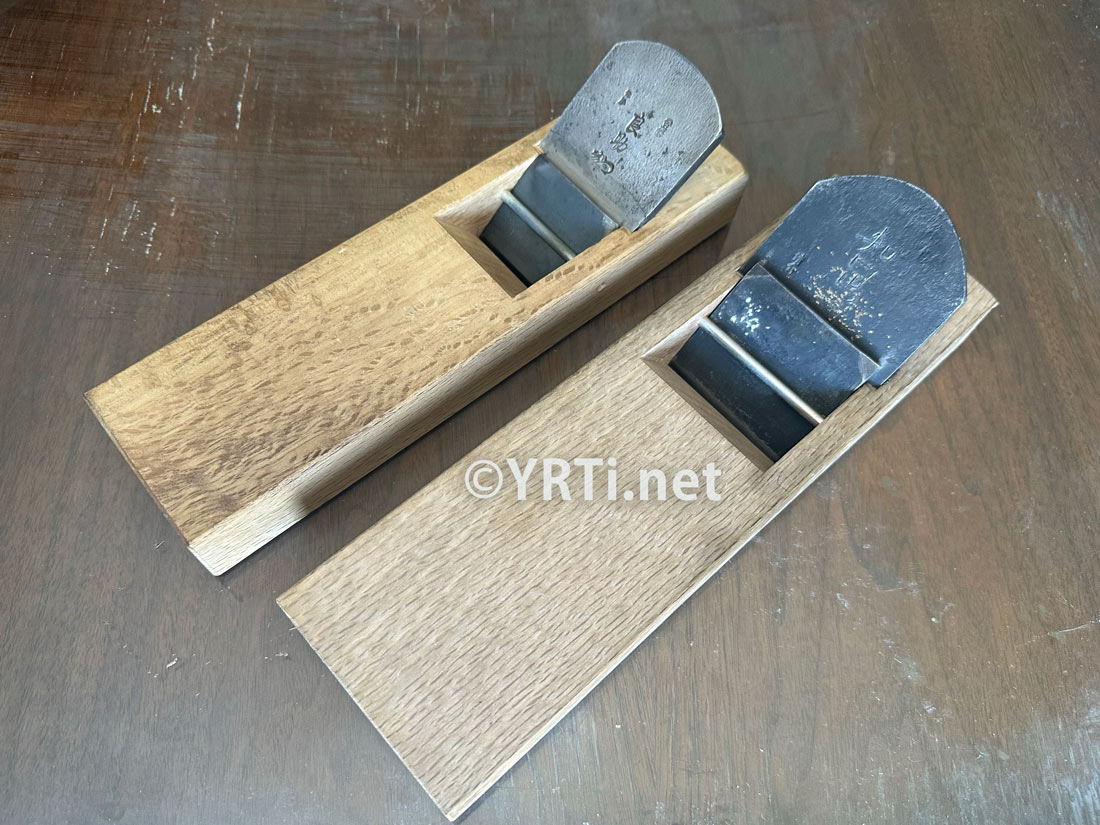
First, all Japanese hand planes are called kanna (鉋), but when you say a kanna, it generally refers to a standard flat-soled hand plane. If you want to be more specific to a flat-soled plane, you can call it a hira-kanna (平鉋).
They come in sizes such as sun-shi (寸四), sun-roku (寸六), and sun-pachi (寸八), but these are simply size designations rather than predetermined categories such as scrub planes or finishing planes. The actual intended use depends largely on how the wooden body, or dai, is prepared and adjusted. While a sun-roku or sun-pachi is better suited for finishing work, a sun-shi is compact, nimble, and very practical.
If you want to make a scrub plane, I recommend starting with an inexpensive plane and converting it into a scrub plane once you get comfortable using it and decide to upgrade to a better one. Also, unless you are trying to take ultra-thin shavings, I recommend choosing a nimai-kanna (二枚鉋), which has a chipbreaker. That said, when you simply refer to a Japanese plane as a kanna, it generally implies a plane with a chipbreaker.
For details on sizing and other specifics, please see [Kanna Experience].
Search Terms for Shopping
- 鉋 (hand plane)
- 平鉋 (hand plane)
- 鉋 寸四 (sun-shi hand plane)
- 鉋 寸六 (sun-roku hand plane)
- 鉋 寸八 (sun-pachi hand plane)
Jointer Plane
Japanese Name: 長台鉋 Nagadai Kanna
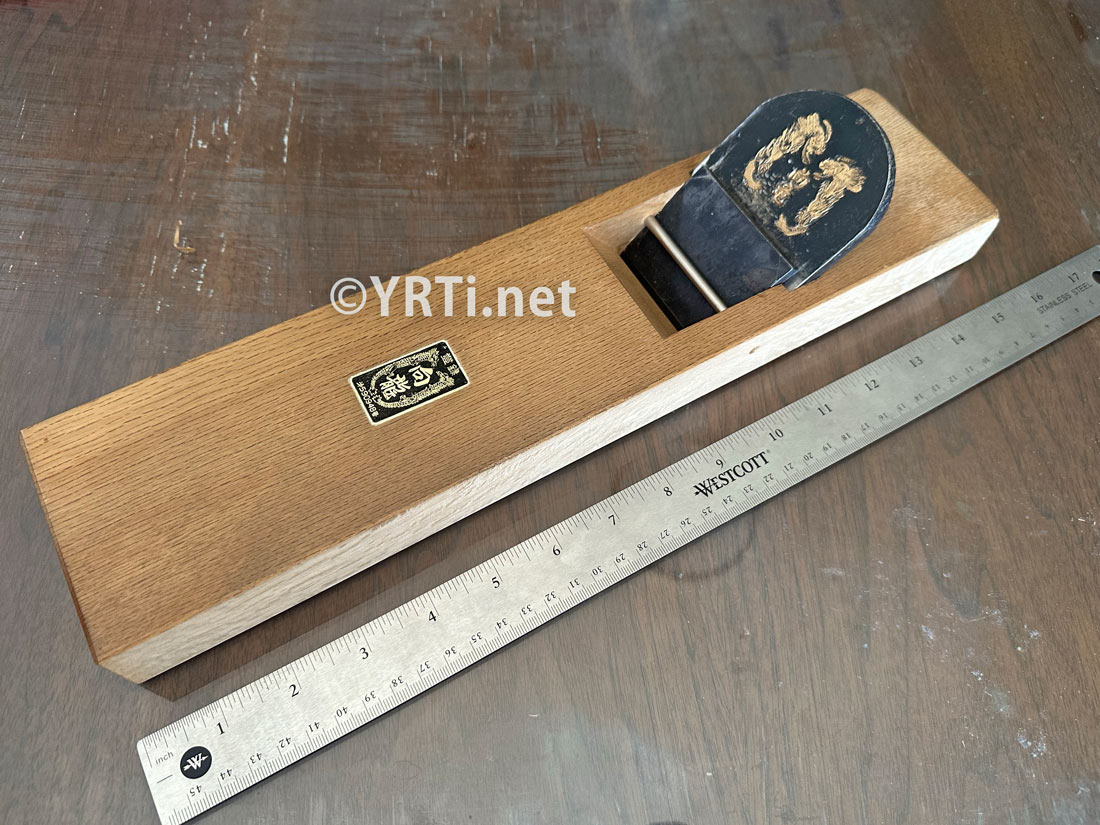
A nagadai kanna (長台鉋) is the Japanese equivalent of a Western jointer plane. Like standard kanna, they come in blade sizes such as Sun-shi, Sun-roku, and Sun-pachi, but feature a longer body, typically around 16 inches (40 cm).
They are used not only for flattening large surfaces, but also with Suri Dai, an edge shooting board to clean up edges. While a wider blade might seem to offer better accuracy, wider planes are actually more difficult to tune. If you mainly use one for planing edges, a narrower nagadai kanna, such as a Sun-shi, is much easier to maintain.
Search Terms for Shopping
- 長台鉋 (jointer plane)
- 長台鉋 寸四 (sun-shi jointer plane)
- 長台鉋 寸六 (sun-roku jointer plane)
- 長台鉋 寸八 (sun-pachi jointer plane)
Skewed Rabbet Plane
Japanese Name: 際鉋 Kiwa Kanna
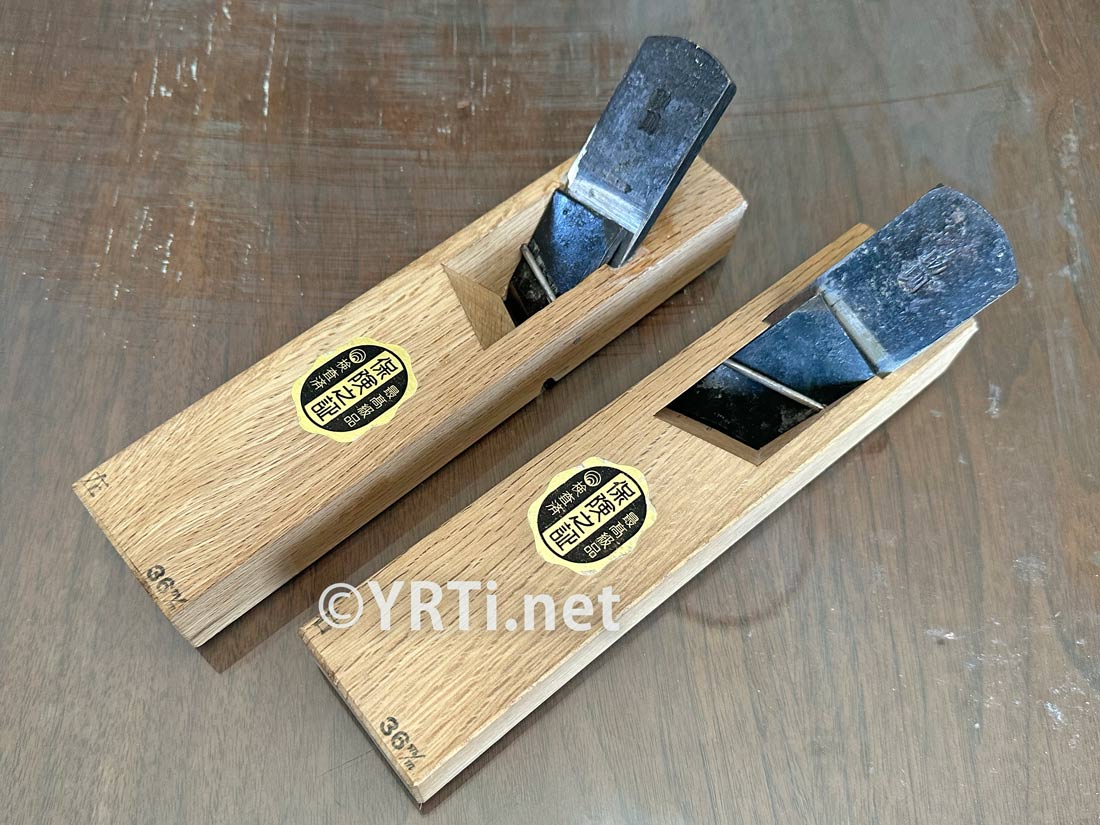
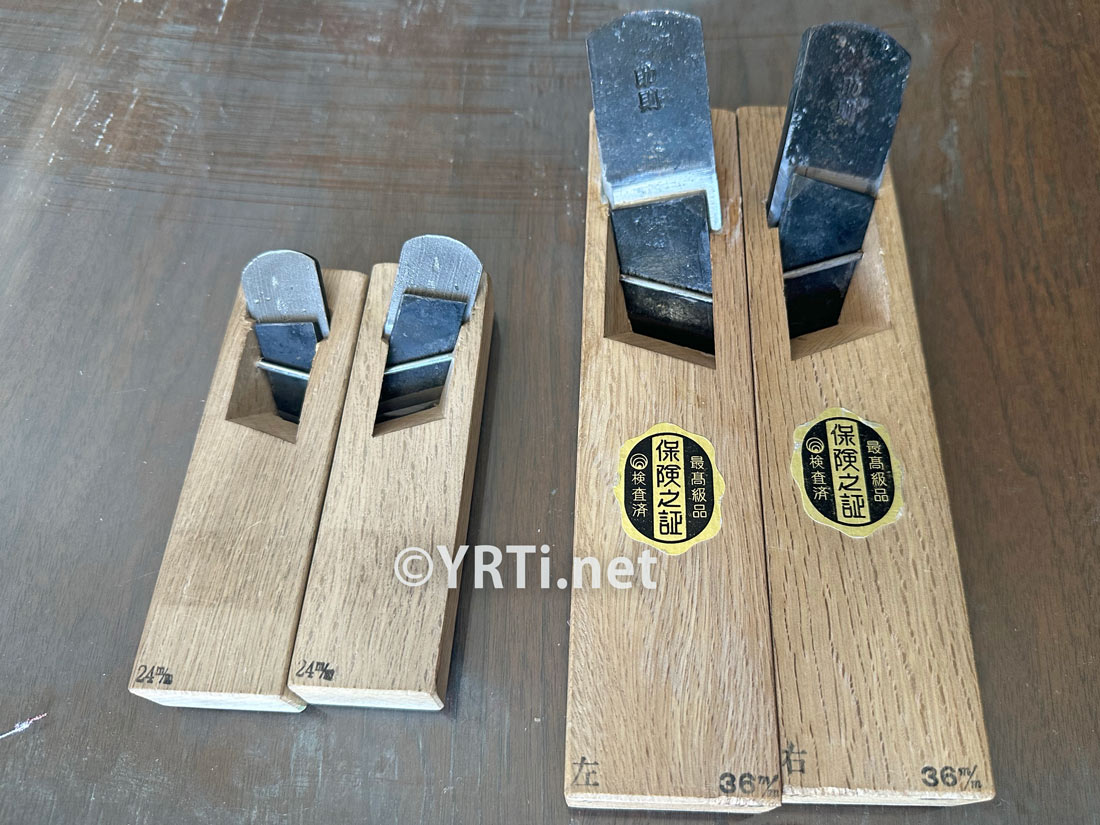
Kiwa kanna (際鉋), or Japanese rabbet planes, are skewed and are useful for cutting rabbets and cleaning up inside corners.
Having two sizes, a standard 36mm or larger plane and a mame kiwa (explained below), is practical for furniture making. Furthermore, since the main goal is to cut or clean up rabbets neatly, it is best to have both right- and left-handed versions so you can work with the grain and prevent tearout.
For reference, a right-handed plane is pulled toward you with your right hand, with its blade set flush to the left edge of the wooden body.
Tuning the body after purchase is also quite exacting; while setting it up for quick, non-critical tasks is easy, tuning it so that it cuts cleanly across its full width is many times more difficult than with a standard plane.
Search Terms for Shopping
- 際鉋 (Skewed Rabbet Plane)
Moving Fillister Plane
Japanese Name: 定規付き際鉋 Jōgi-tsuki kiwa kanna
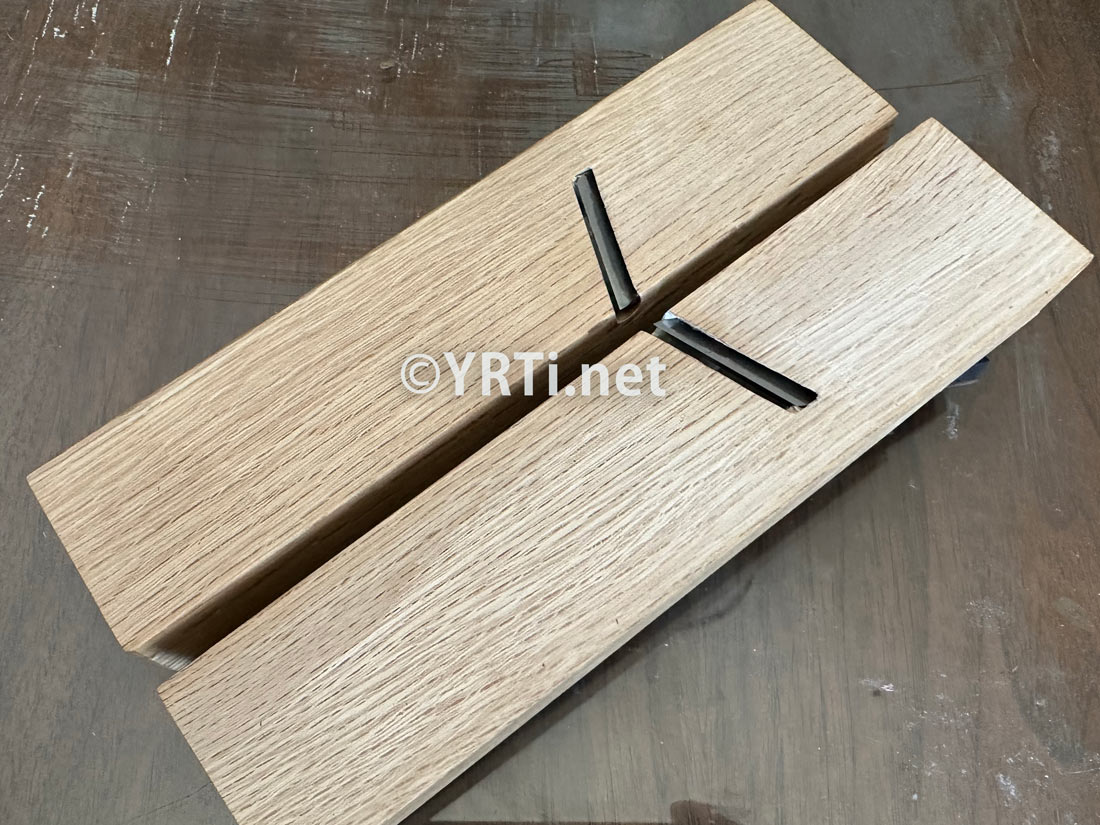
Jōgi-tsuki kiwa kanna (定規付き際鉋) is a Japanese moving fillister plane. The name simply describes a kiwa kanna with a guide fence attached, which makes it ideal for cutting rabbets to any desired width. In addition, most jōgi-tsuki kiwa kanna come with a nicker on the side, called a hari (針), allowing them to cut cleanly across the grain.
It is exceptionally handy when making boxes or panels that fit into a frame such as traditional framed door panels. Just like standard rebate planes, having both right- and left-handed versions is recommended if possible to prevent tearout.
One important difference from a Western moving fillister plane is that a jogi-tsuki kiwa-kanna does not have a depth stop.
Search Terms for Shopping
- 定規付き際鉋 (Moving Fillister Plane)
Plow Plane/Grooving Plane
Japanese Name: 機械作里鉋 kikai shakuri(sakuri) kanna
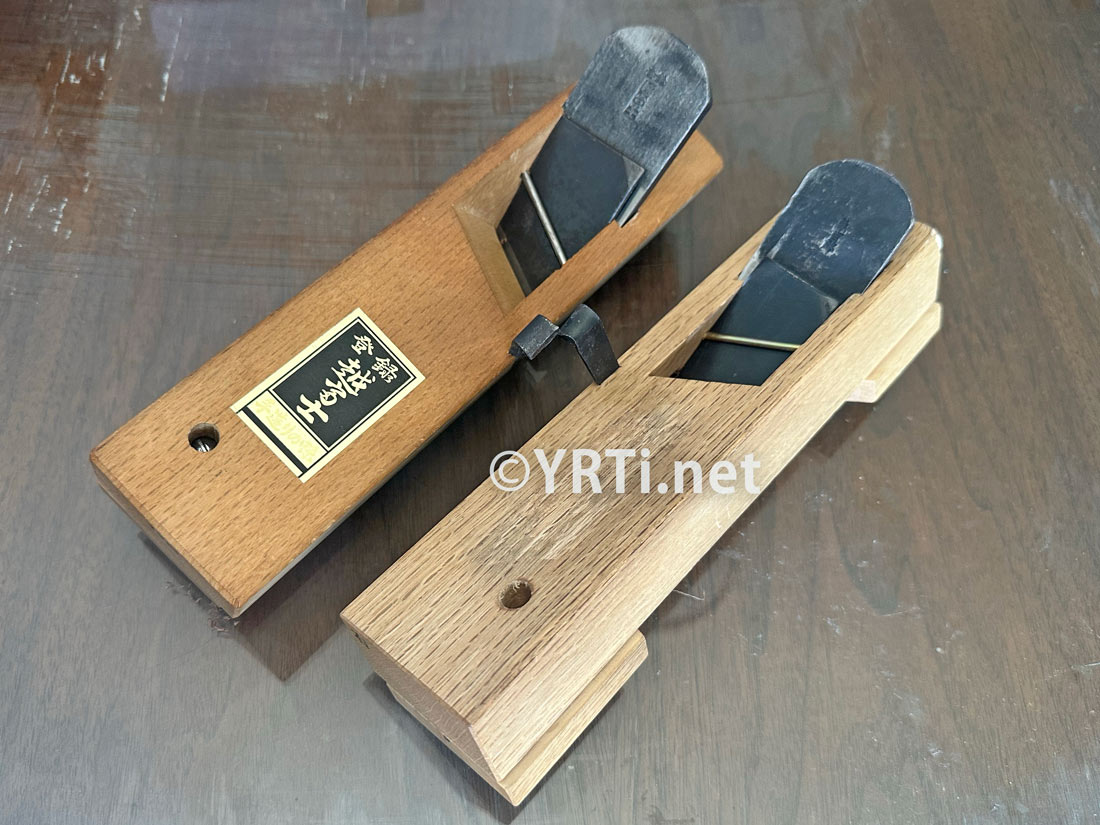
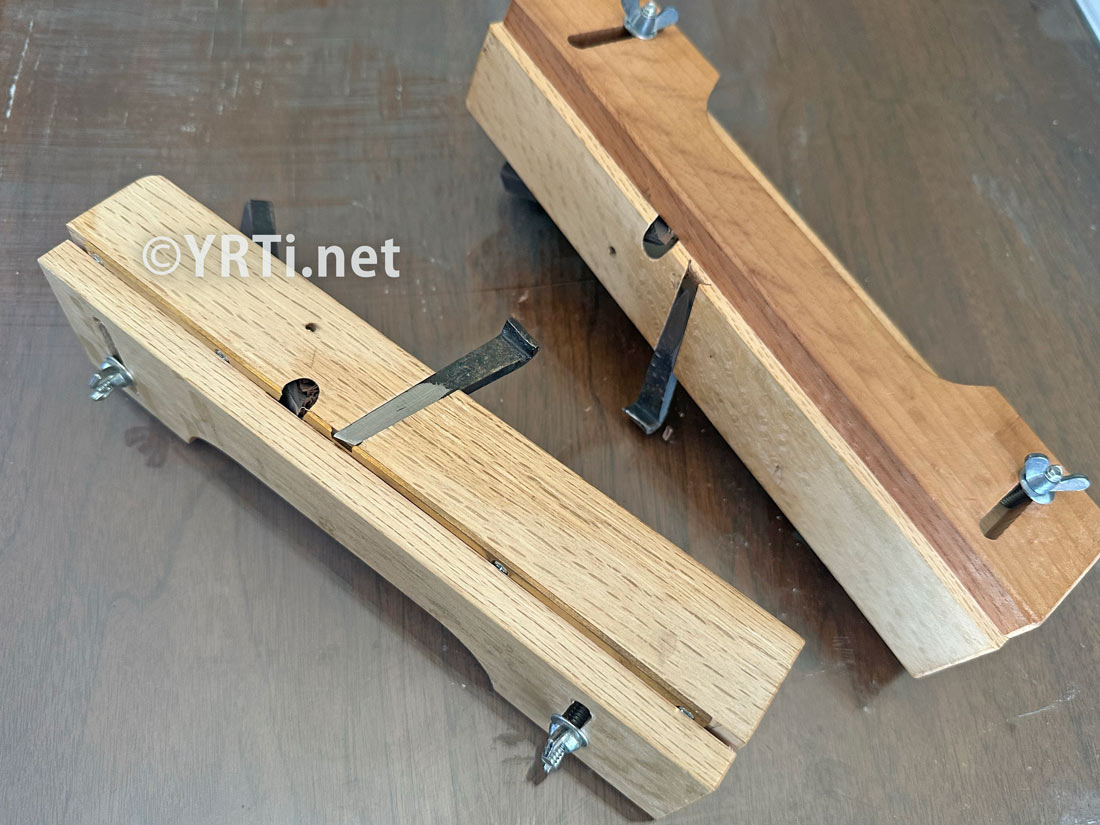
kikai sakuri kanna(機械作里鉋) is essentially a grooving plane. Its key feature is having nickers, called hari, on both sides of the main blade, allowing you to cut clean grooves or dadoes.
However, unlike Western plow planes, you cannot swap out blades to cut different widths, so you need a dedicated plane for each blade size you require. If you make smaller items, having a 6mm or 4.5mm size, slightly smaller than a quarter inch, is very practical. It is also worth noting that you can widen a groove by simply cutting right next to an existing one.
Search Terms for Shopping
- 機械作里鉋 (Plow Plane)
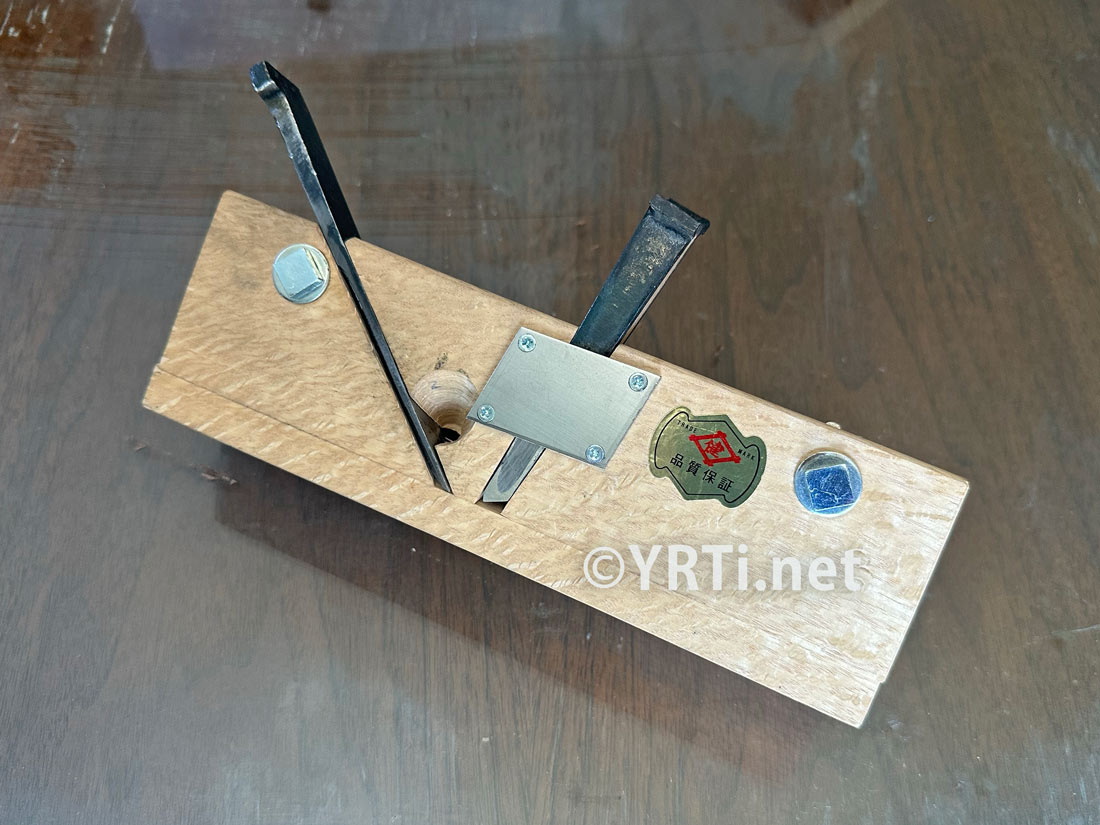
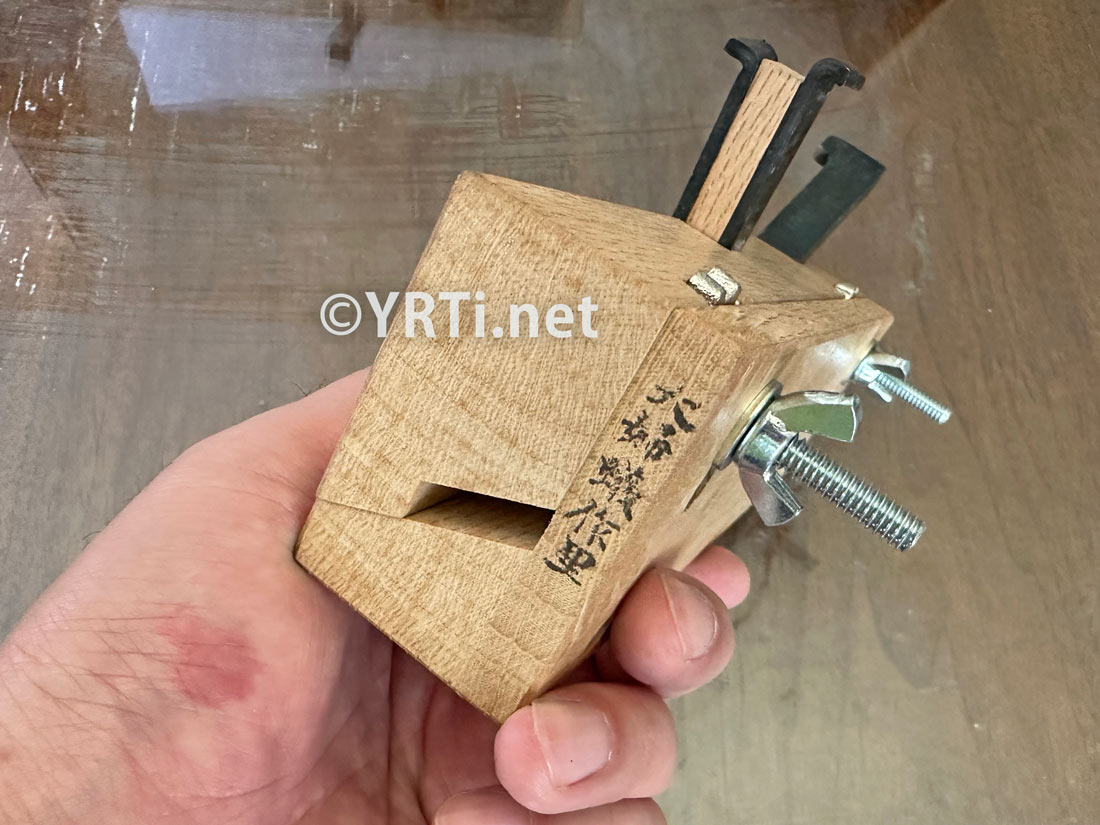
Dovetail Plane
Japanese Name: 片木作里鉋 Katagi Shakuri(sakuri) Kanna, 兼用蟻作里鉋 Ken-yo Ari Shakuri Kanna, or 夫婦蟻作里鉋 Fufu Ari Shakuri(sakuri) Kanna
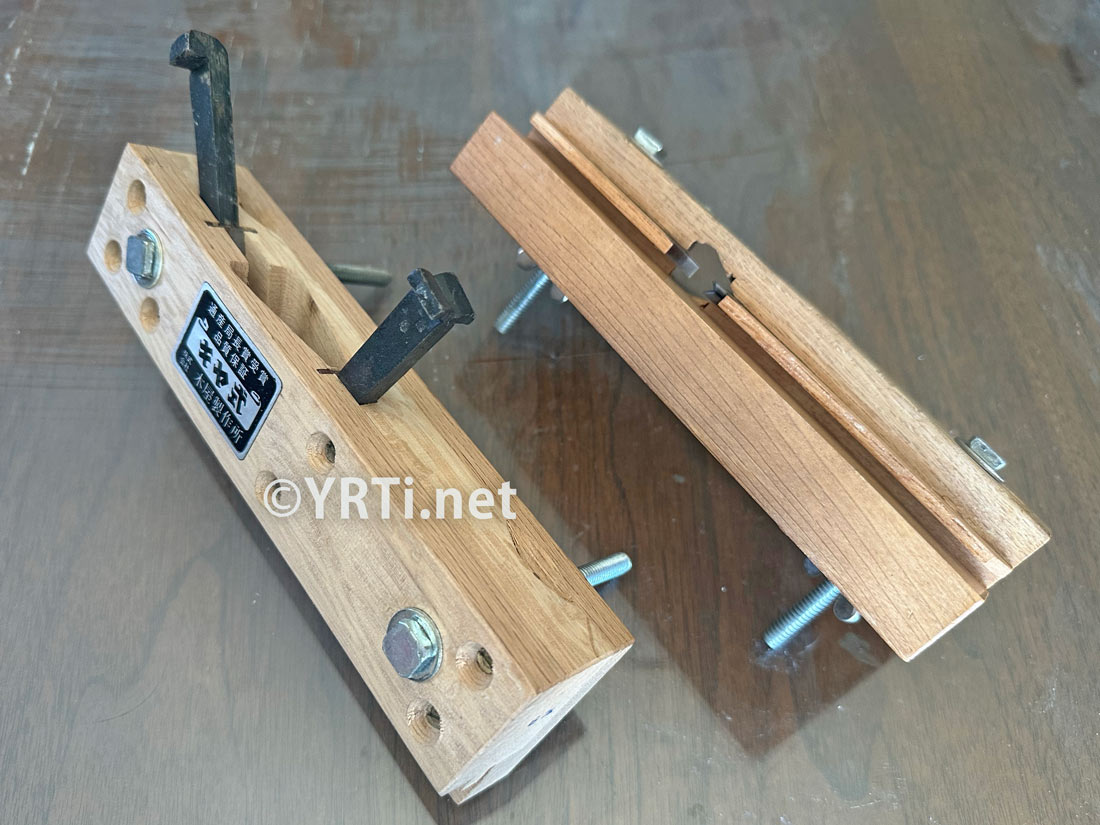
Katagi shakuri kannna(片木作里鉋) is a plane convenient for cutting sliding dovetails, and its guide and sole shapes vary slightly depending on the maker. It can cut both the tail and the mortise, though the mortise side takes a bit of practice. It is especially handy for tasks like cutting sliding dovetails on the end grain of shelf boards.
Search Terms for Shopping
- 片木作里鉋 (Dovetail Plane)
- 兼用蟻作里鉋 (Dovetail Plane)
- 夫婦蟻作里鉋 (Dovetail Plane)
Chamfer Plane
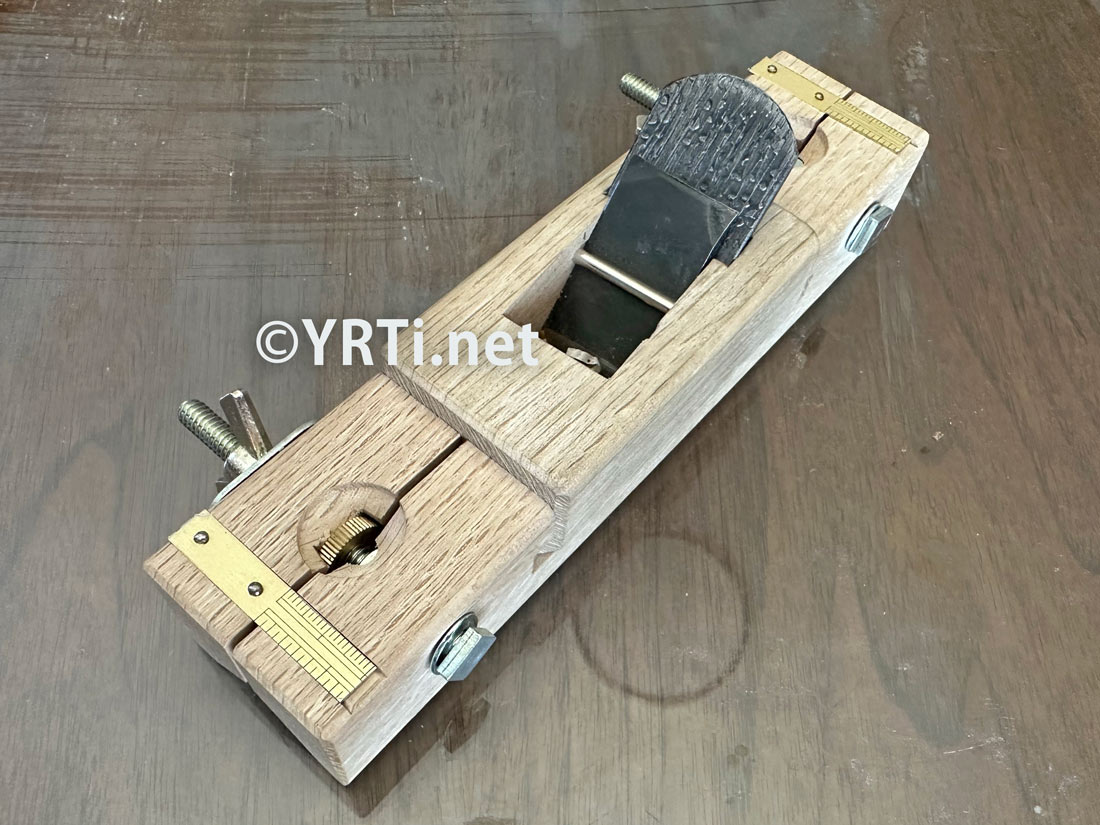
Japanese Name: 角面取り鉋 Kaku Mentori Kanna, 自由角面取鉋 Jiyu Kaku Mentori Kanna
Kaku Mentori Kanna(角面取り鉋) is convenient for chamfering edges at 45 degrees. It allows you to set the chamfer width freely and accurately. Planes designed for chamfer angles of 30 or 60 degrees are called ete-mentori-kanna/saru-mentori-kanna(猿面取鉋) or sarubō-mentori-kanna(猿頬面取鉋). Those with a skewed blade setup are known as isuka-jikomi(イスカ仕込み).
Search Terms for Shopping
- 角面取り鉋 (Chamfer Plane)
- 自由角面取鉋 (Chamfer Plane)
- 猿面取鉋 (30 or 60 degrees chamfer plane)
- 猿頬面取鉋(30 or 60 degrees chamfer plane)
- イスカ仕込み (Skewed)
Spoke Shave
Japanese Name: 南京鉋 Nankin Kanna
Nankin-kanna (南京鉋) is a spokeshave. When bought new, many come with unfinished handles so you can shape them to your liking. The soles are usually flat when new, but are typically rounded to create a curved sole for use.
Search Terms for Shopping
- 南京鉋 (Spoke Shave)
Scraper Plane
Japanese Name: 台直し鉋 Dai Naoshi Kanna or 立ち鉋 Tachi Kanna
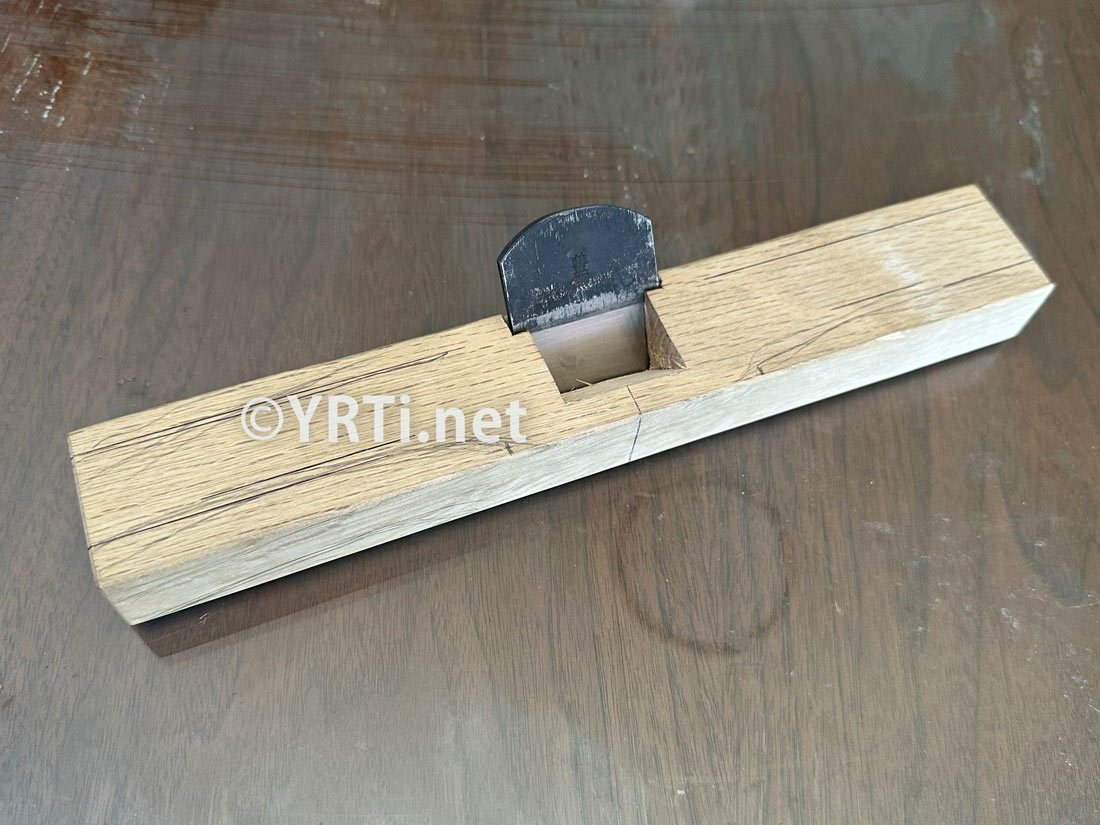
Dainoshi kanna(台直し鉋) is a plane used for adjusting and flattening the wooden kanna body, or dai. There is a surprisingly wide variety of them depending on factors like sole shape and blade angle.
Search Terms for Shopping
- 台直し鉋 (scraper plane)
- 立ち鉋 (立ち鉋)
Mini Planes
Japanese Name: 豆鉋 Mame Kanna
Mame kanna (豆鉋) generally refers to miniature hand planes. While it usually applies to planes with blade widths of up to around 48 mm, the term emphasizes a compact body that allows for excellent maneuverability. They come in a wide variety of types, effectively serving as miniature versions of standard-sized kanna. Some types also have specific names that include mame, such as mame kiwa kanna(豆際鉋), a miniature kiwa kanna (rabbet plane) that is extremely convenient for cleaning up rabbets on small boxes.
Search Terms for Shopping
- 豆鉋 (mini hand plane)
Other Kannas
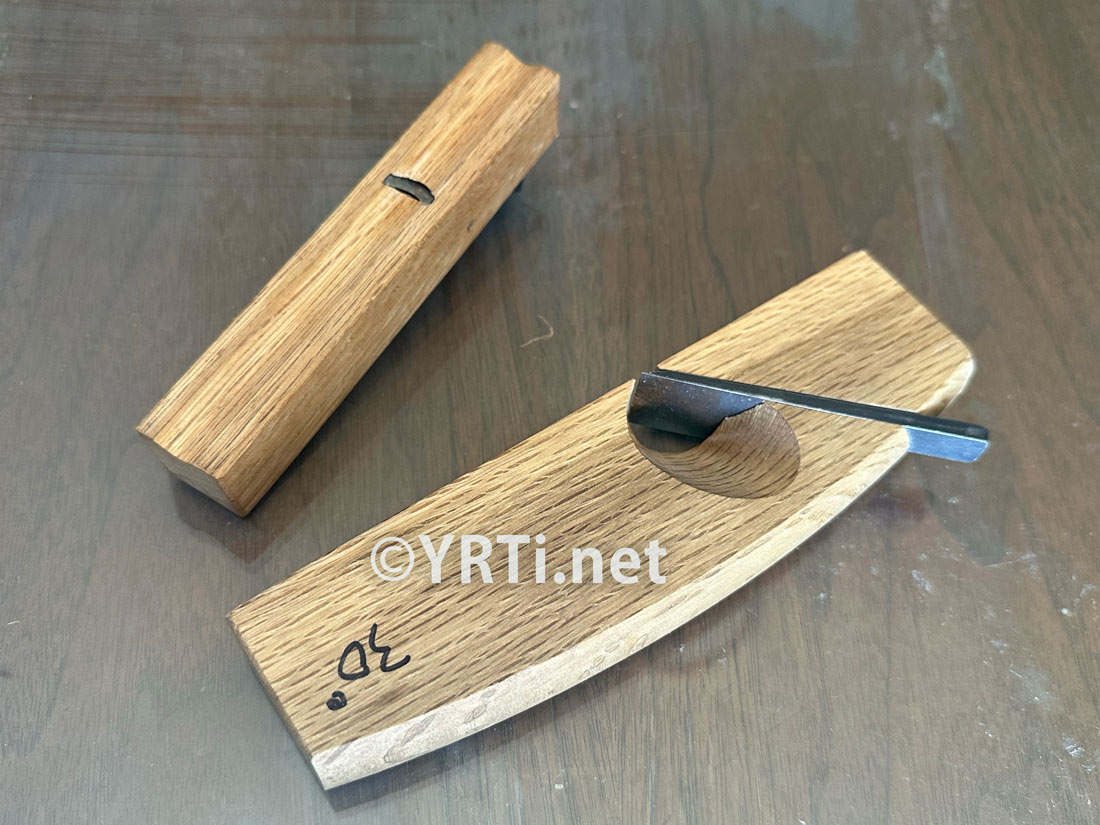
反り鉋 (Sori Kanna) – Compass plane
四方反り鉋 (Shiho Sori Kanna) – a type of compass plane, but its sole is curved across the width of the blade as well.
外丸鉋 (Sotomaru Kanna) – a plane with a sole that curves outward across the width of the blade, used for cutting round grooves.
内丸鉋 (Uchimaru Kanna) – a plane with a sole that curves inward across the width of the blade, useful for rounding over edges.
坊主面鉋 (Bouzumen Kanna) – a plane to cut rounded profiles similar to an uchimaru-kanna, but it typically has a narrower blade width. Because it is primarily used for rounding over edges, its sole is shaped to fit snugly onto a 90-degree corner.
墨付き鉋 (Sumitsuki Kanna) – Similar to a short-nose bullnose plane or a chisel plane, used for cleaning up inside corners.
櫛鉋 (Kushi Kanna) – a plane used for flattening the bottom of grooves. However, because its blade spans the full width of the body from edge to edge, it can also be used as a rabbet plane.
Where to Buy?
I enjoy visiting tool stores and talking with the staff to decide which planes to buy, so I bought most of mine while visiting Japan.
However, traveling to Japan just to buy tools is far too expensive. For anyone looking to buy tools from Japan, I recommend using JDirectItems Auction, which covers Japanese marketplaces such as Yahoo! Flea Market and Yahoo! Auctions, through a proxy service such as Buyee or ZenMarket. It is a great place to find everything from brand-new and new-old-stock items to reasonably priced used tools.
The way it works is simple. You do not need an account with Yahoo! Flea Market or Yahoo! Auctions. Instead, you log into your proxy service account and search for and purchase items through the proxy service. When you make a purchase, you first pay for the item and wait for it to arrive at the proxy service’s warehouse. Once the proxy service notifies you that your item has arrived, you arrange to have it shipped to your address.
This is especially convenient when buying from multiple sellers, as the proxy service can store your items in its warehouse and consolidate them into a single shipment. However, free storage periods and consolidation options vary depending on the service you use.
One thing to keep in mind is that even if an item is listed with free shipping, this only covers shipping from the seller to the proxy service’s warehouse. You still need to pay for international shipping to your home. Also, if you live in the US, customs duties can add a significant amount to the total cost.
For example, when I bought two small kanna for about 5,000 yen each, the additional costs for international shipping, handling fees, and customs came to about 6,500 yen in addition to the cost of the tools. Since the two kanna themselves cost 10,000 yen, the additional costs were surprisingly high.
Link
*If you create a Buyee account using the link above, you can get a 1,000-yen shipping coupon.Clicking the URL will take you to the top page of the Buyee site. You will receive the coupon upon completion of member registration according to Buyee.
FYI, I have some extra new planes for sale here. I got these from Japan, paying the customs duties and shipping myself, but I am selling them for less than what you would normally pay for the same items.
There is only so much I can cover here, and there are things I am not experienced enough to say for certain, as well as some bits of blacksmithing knowledge that I know but do not really have enough to say about at length. If you ever have any questions, feel free to reach out through the contact page or send me a DM on Instagram (and do not forget to follow me on IG!).