
I may use this page to explain what I wanted to say when I reply to someone on YouTube but I wasn’t able to complete it because of my language ability or simply it’s too long as a comment.
To paololamperti6131
This is a very rough draft but I hope you get an idea about the dimension.
Cutting a Plywood
First, I bought 2ft x 4ft 3/4″(19mm) plywood and cut it like the picture below. Since the size doesn’t need to be that accurate, I didn’t consider the kerf width of my saw so the cutout pieces are smaller than the dimension in the picture.
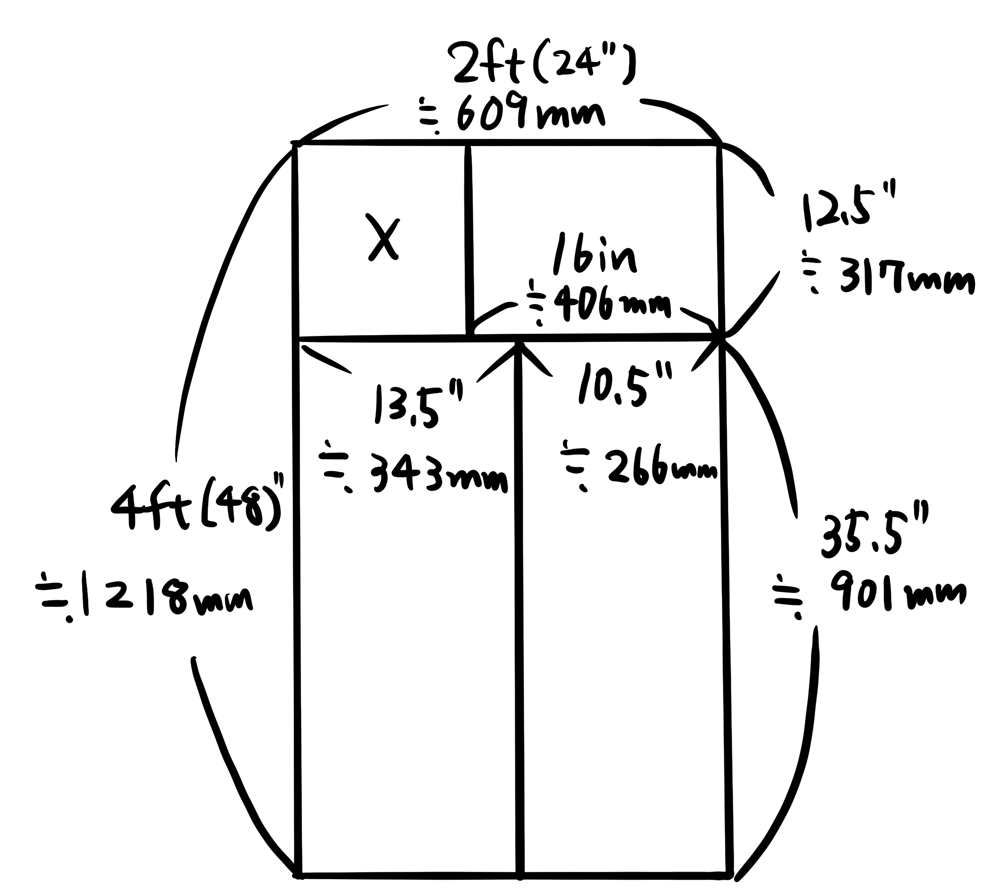
Edge Shooting board/Plane Board
The stop block was 3/4″ x 3/4″ piece and cut out 3/16″ x 3/16″ and fit in to the groove so the stop block height above the surface 9/16″(14mm).
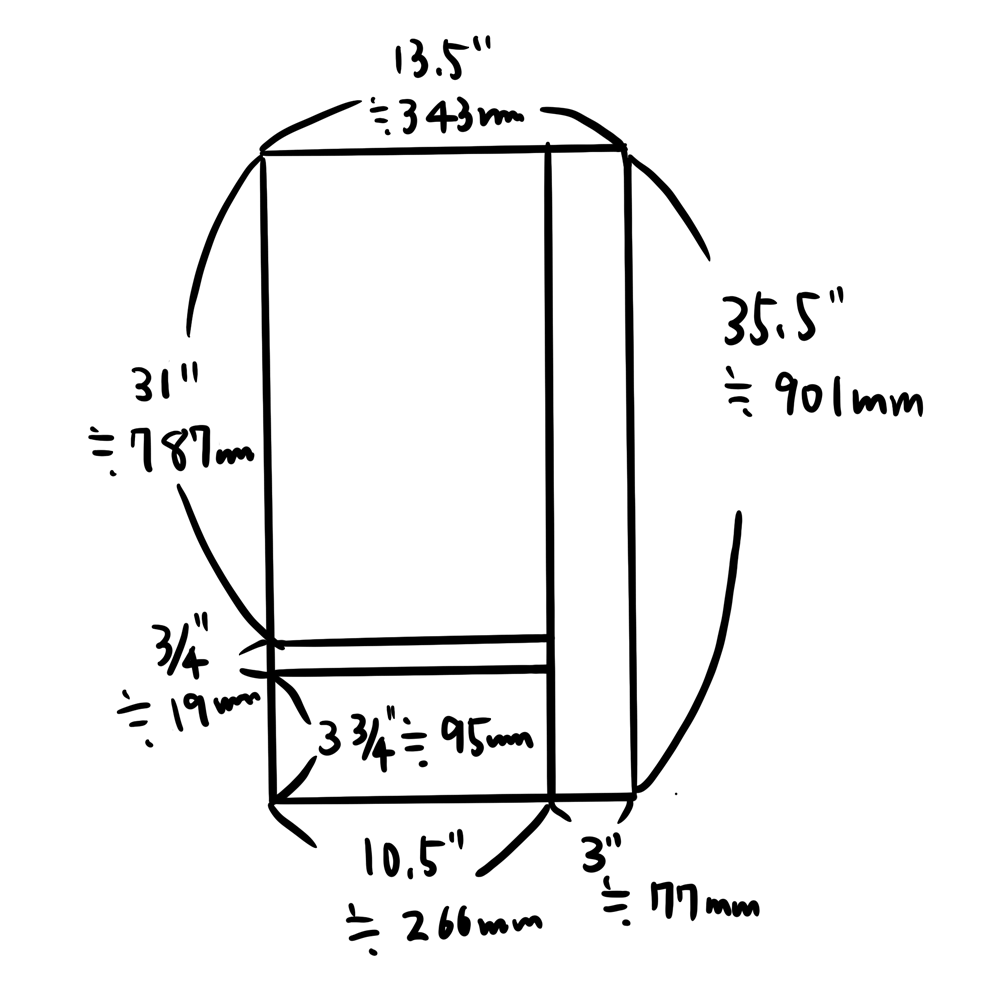
End Grain Shooting Board
This one can handle up to 12″ width board but I usually handle up to 6-8″(mostly 2-4″) width board so it didn’t have to be this big. I just made it in the size so I can clamp it to my workbench easily.
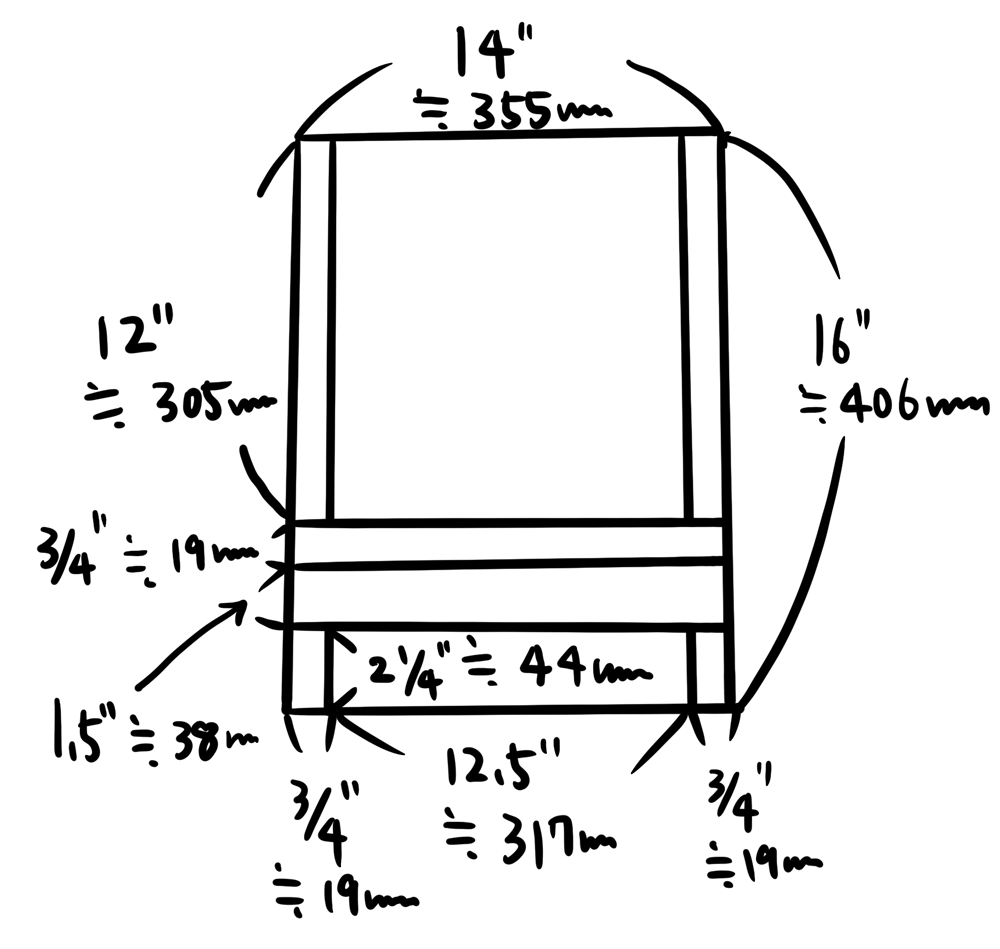
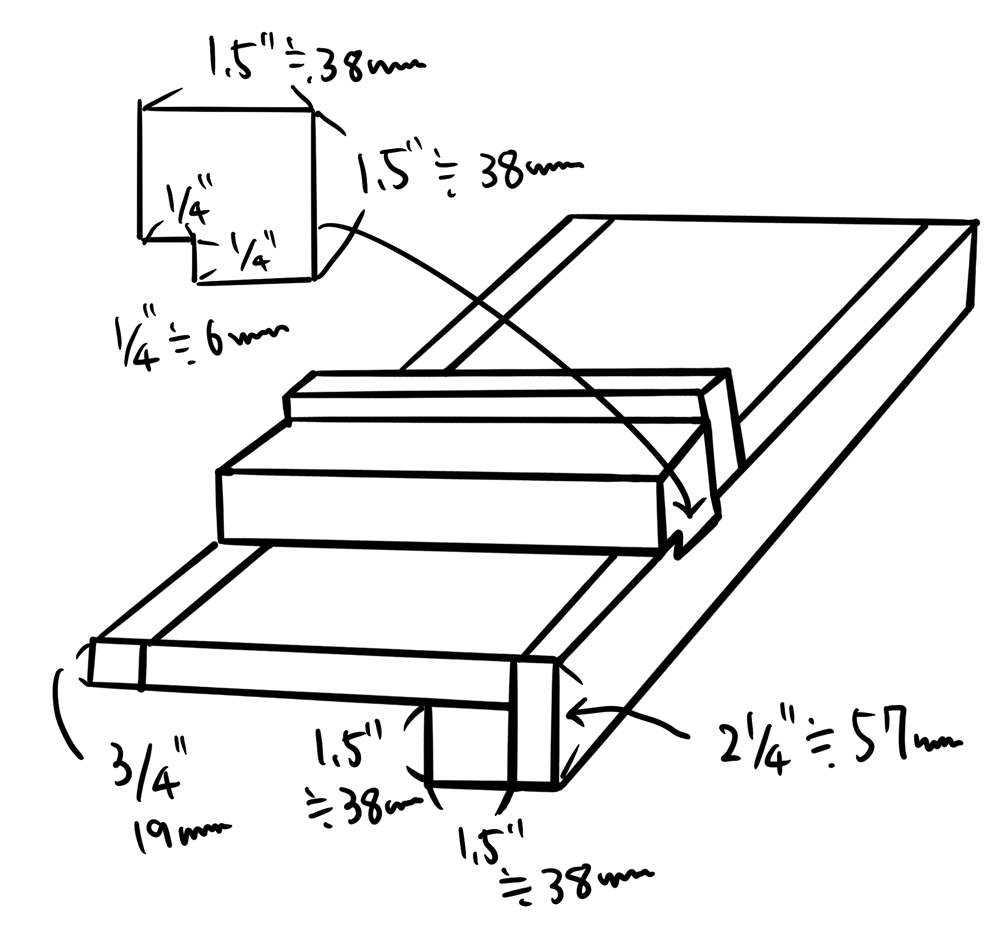
To chloestarksen1921
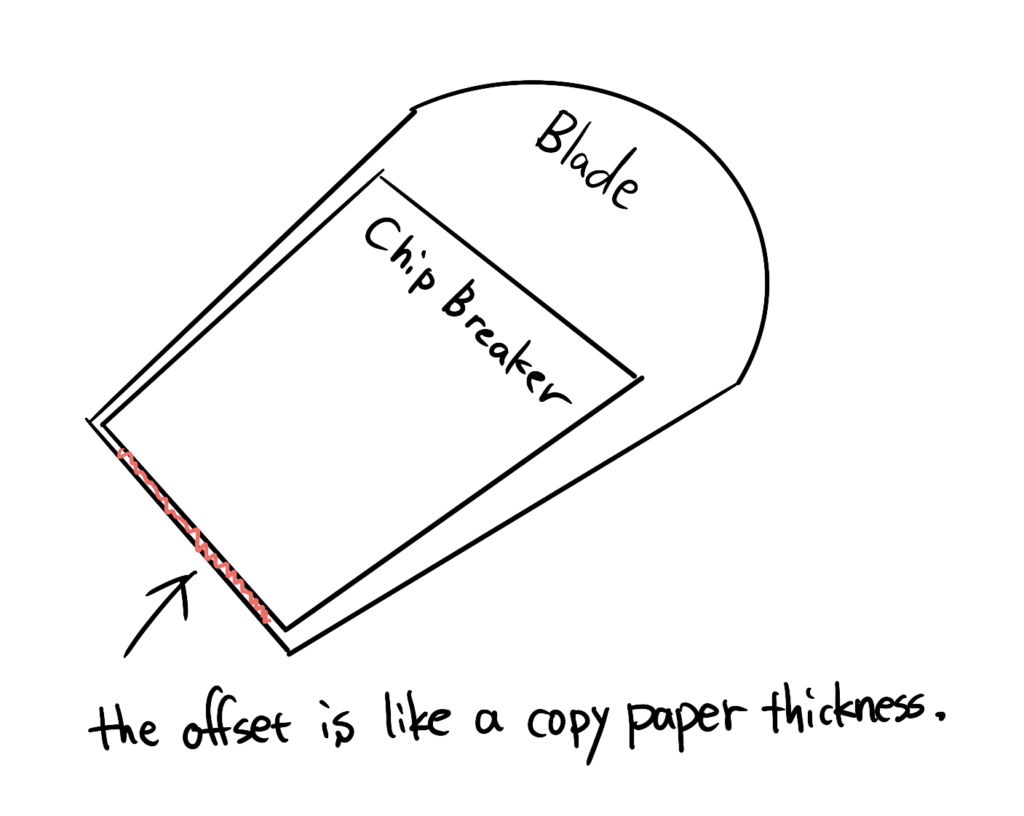
I was going to take a picture of how tight I set the chip breaker to the blade but I wasn’t able to take it with my camera(too small difference). It’s almost flush to each other but the chip breaker is offset by like a copy paper thickness..
If chip breaker is set tight, shavings come out straight like this (the first one goes straight out). Depending on the wood surface, it still curls a bit (like the second shaving) but it’s not like super curly rolled.
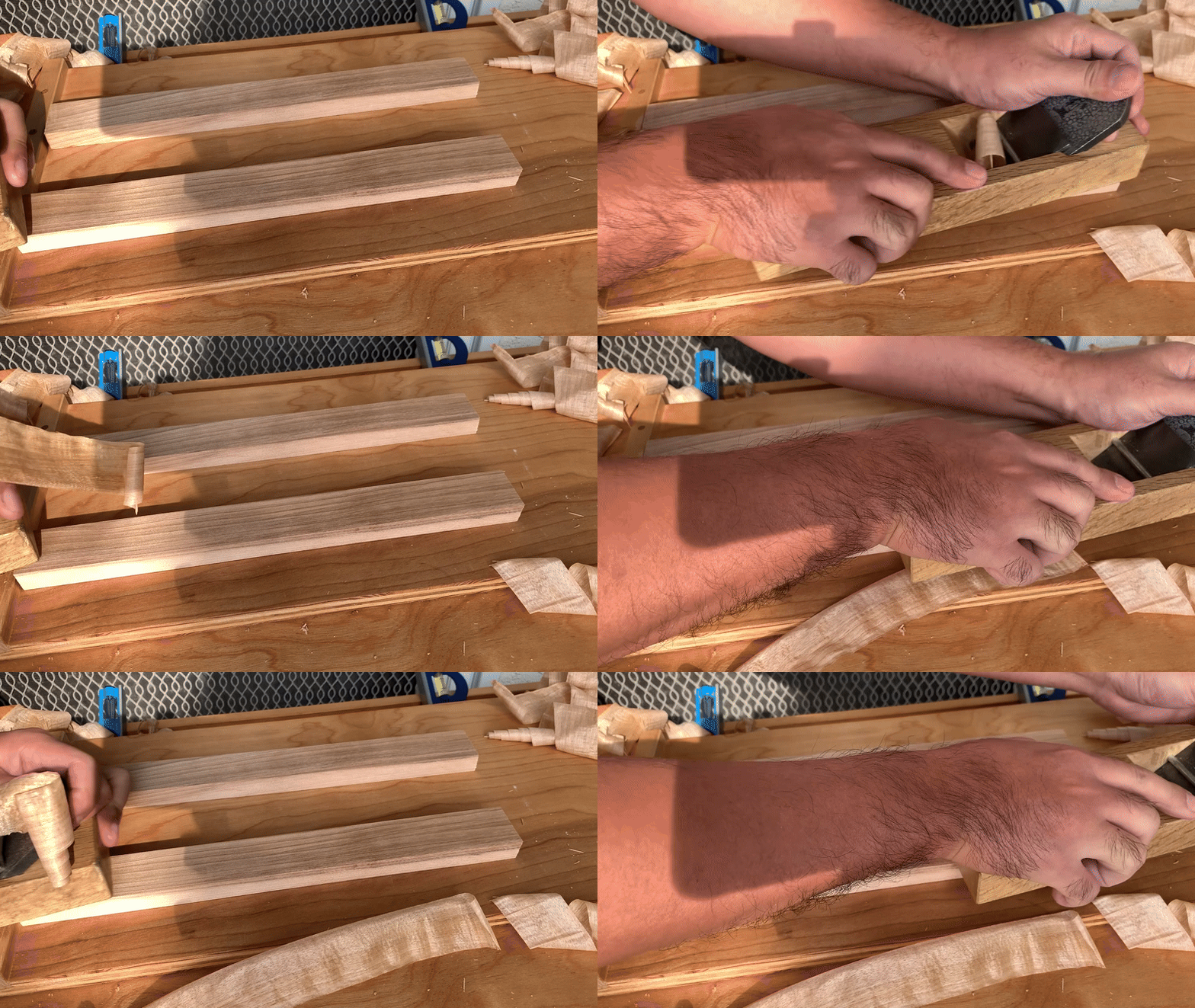
This makes it a little hard to pull the plane but the surface has only minimal tear out. If you happen use a western plane, I assume the logic is the same.
To franciscoayala1062
I don’t have a plan for the knife stand but I just drew the key points.

I hope it helps:)
To socketwench
The Japanese winding sticks is called 下端定規(Shitaba Jougi), which basically means “bottom edge ruler”. and it is basically used to adjust the sole of Japanese planes.
The picture below is the one on my book(it’s metric).
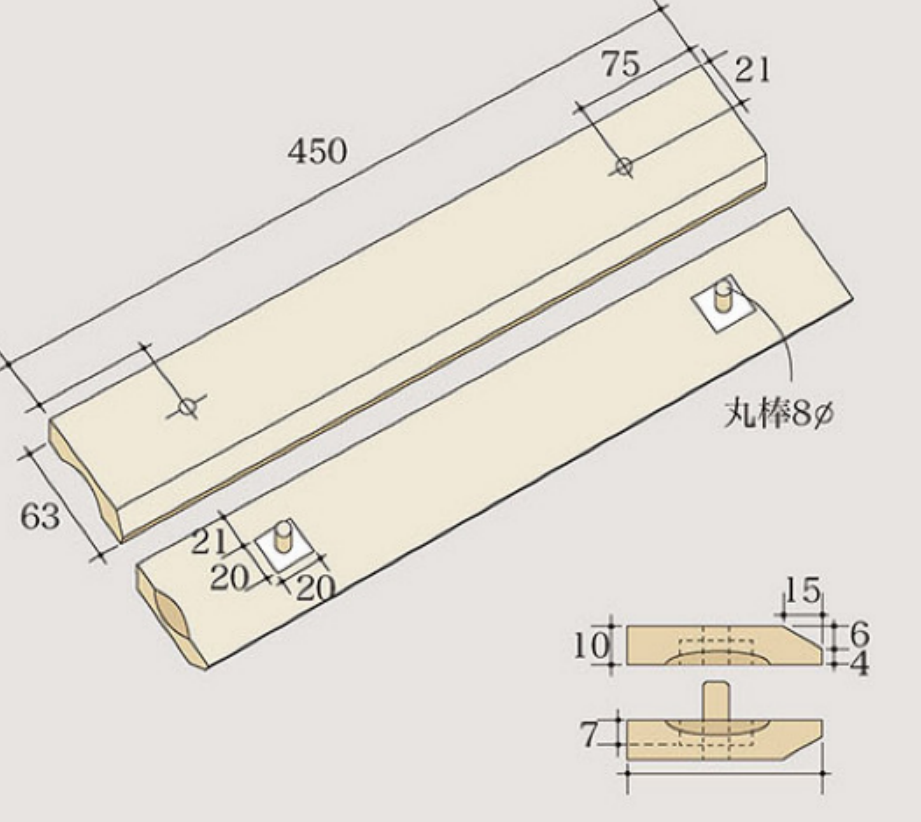
It seems like they usually put dowel pins to keep 2 sticks together. My book says to put a base inlay(not glued) for each each dowel pin and its mortise so it’s easy to replace once a dowel gets loosen.
I also found some random Japanese websites that have the information.
- WEBSITES/Shitaba Jougi
- Daiku Dougu
- Kurayuki Abe
- Kurayuki Abe
To xjj99
About the hand plane blade adjustment…
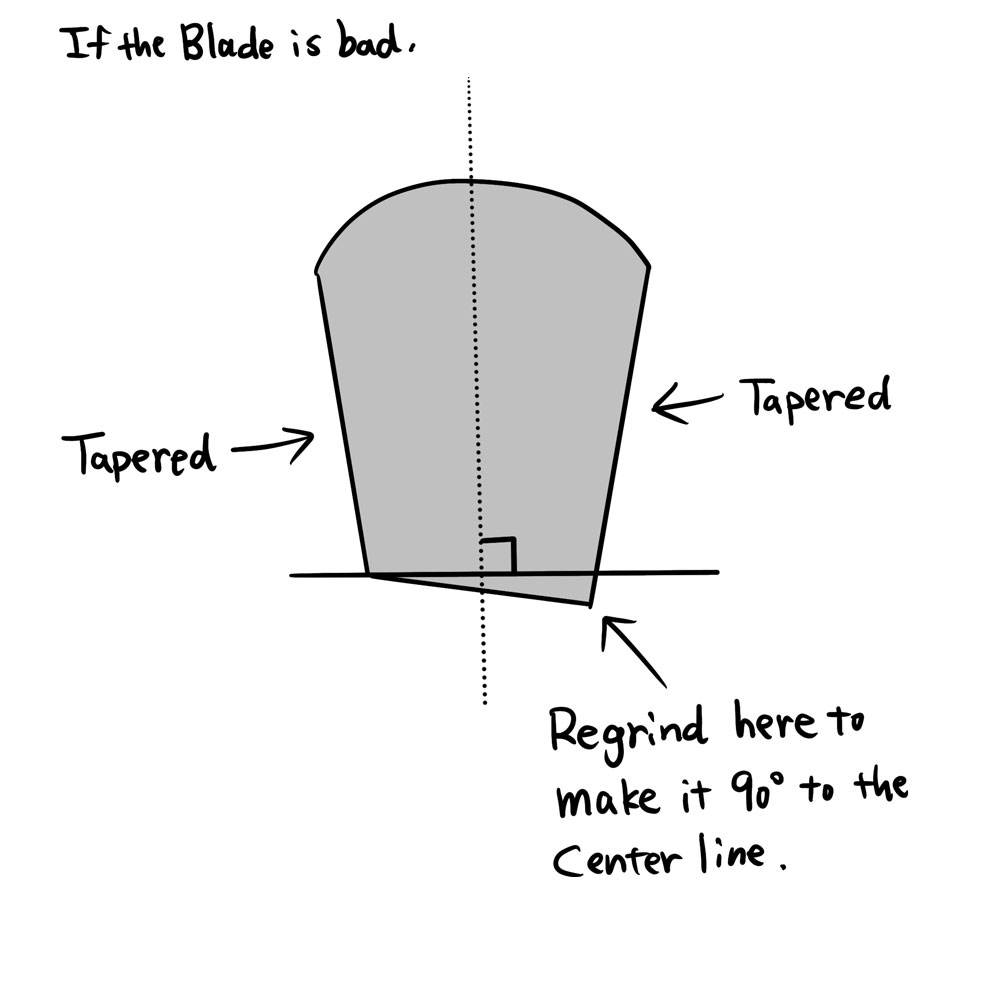
1st, a cutting iron from a mass produced hand plane may look like below. That will make the blade adjustment extremely difficult. If that’s the case, you need to regrind the cutting edge. However, the sides of the cutting iron may be tapered so it’s kind of tricky to correct it.
I find the center line and regrind the cutting edge 90 degrees to the center line. It’s actually a lot of work…
When using a hand plane and I need to adjust the blade…
This is just how I do(may not be a correct way).
Let’s say the right side of the blade is too much just like the picture.
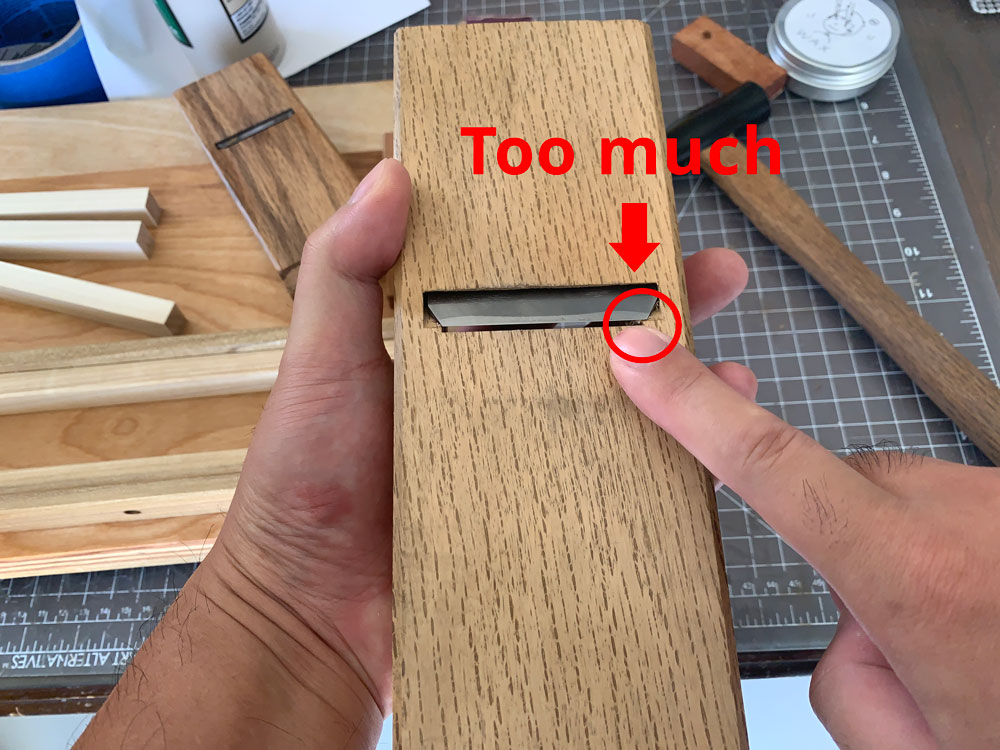
Then I super gently tap the right side of the blade (like tap it to push out) just like the picture.
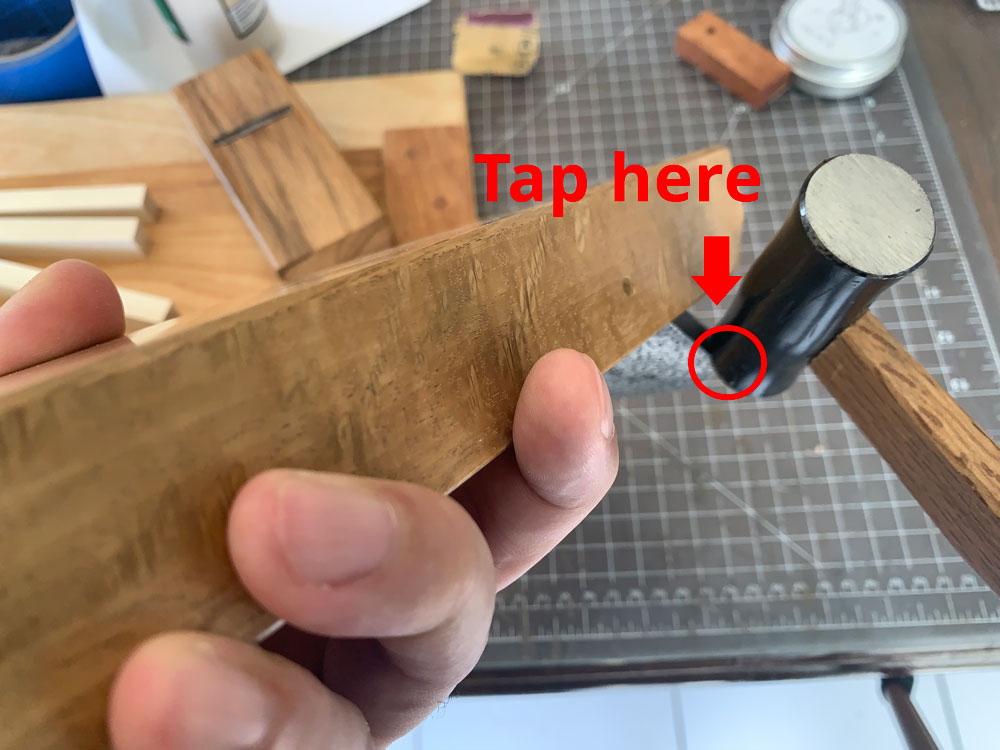
If it’s the other side, then, tap the other side. Once you get used to it, it’s quick to set…